
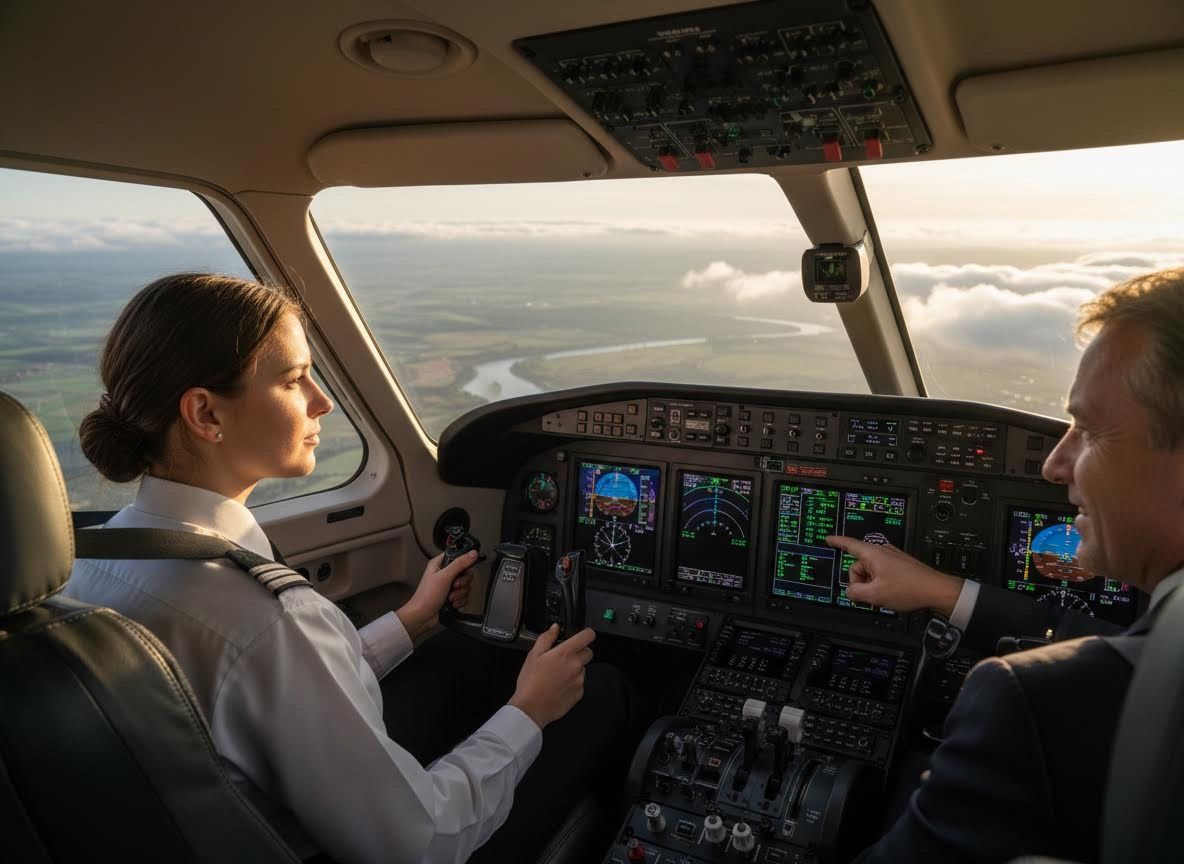
For pilots charting a course toward advanced aviation careers, the accumulation of multi-engine flight hours represents a critical benchmark. These hours are not merely a number; they are a testament to a pilot's expanded skill set and a gateway to more complex aircraft operations and professional opportunities. Within this essential phase, the initial 25 multi-engine hours act as a foundational period, influencing a pilot's future trajectory and marketability. HighSky Aero understands the pivotal role this early multi-engine experience plays in a pilot's professional development.

Establishing Your Foundation
The transition from single-engine to multi-engine aircraft introduces a new realm of operational complexity. That's why the first 25 multi-engine hours are crucial for pilots to deeply ingrain an understanding of multi-engine aerodynamics, asymmetric thrust principles, and the nuances of managing multiple powerplants. This period allows for extensive practice with critical engine procedures, advanced emergency scenarios, and the effective operation of retractable gear and constant-speed propellers. It is during these initial aviation courses that pilots solidify their decision-making skills under varied conditions, developing the precise control and systems management required for higher-performance aircraft.

Meeting Industry Prerequisites and Enhancing Employability
In the competitive landscape of professional aviation, the first 25 multi-engine hours often serve as a significant indicator of a pilot's dedication and aptitude. Airlines and corporate flight departments frequently specify minimum multi-engine flight time as a prerequisite for entry-level positions. Successfully completing this initial block of flight time building not only fulfills these often-mandated requirements but also demonstrably sets a candidate apart. It signals to prospective employers that a pilot has proactively invested in advanced pilot training and possesses the initial hands-on experience necessary to transition into more demanding operational environments.
Bridging the Gap and Building Operational Confidence
Beyond the technical skills and resume requirements, the initial 25 multi-engine hours are instrumental in building a pilot's confidence and operational acumen. This period marks a significant shift from traditional single-engine flight training, challenging pilots to adapt to increased performance, speed, and the unique challenges of multi-engine flight. These early hours provide the practical, real-world experience that cannot be fully replicated in a simulator, allowing pilots to truly integrate their theoretical knowledge with practical application. These foundational hours foster a deep sense of comfort and capability with multi-engine operations, paving the way for continued growth and proficiency in their professional flight training journey.
The initial 25 multi-engine training hours are truly a cornerstone for any pilot aiming for an advanced aviation career, solidifying essential skills, meeting critical industry benchmarks, and boosting overall operational confidence. This foundational flight time building phase is indispensable for pilots transitioning into more demanding roles and demonstrating a commitment to professional excellence. To ensure these vital hours are acquired efficiently and affordably, HighSky Aero provides tailored solutions for multi-engine and single-engine time building. Learn more about our specialized programs to help you achieve your career objectives with confidence and capability!